

Aluminum Sheet for Boat Building
Marine aluminum alloys, with their advantages of lightweight, corrosion resistance, and ease of processing, have gradually replaced traditional steel as the mainstream choice, among which 5083, 5052, and 5086 aluminum sheet for boat building occupy a core position. Although they all belong to the aluminum-magnesium alloy family, they each have specific performance focuses, precisely matching the application requirements of different parts of a ship.
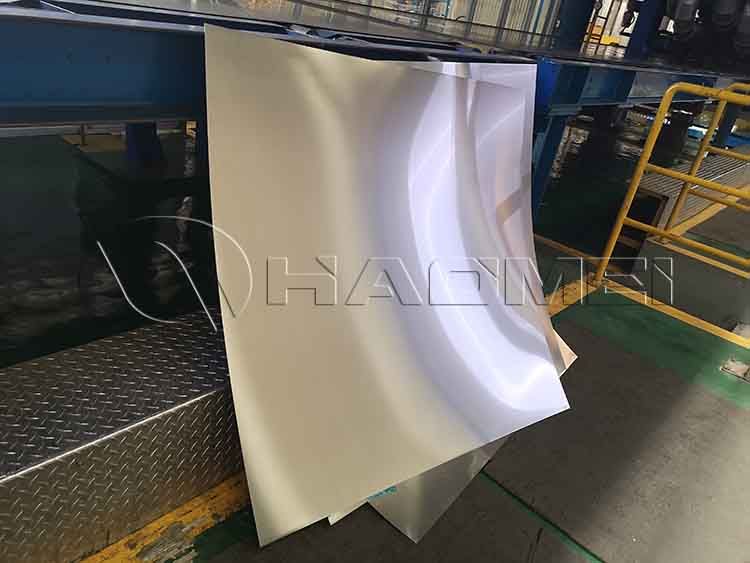
5083 Aluminum Plate
As the "gold standard" material for marine aluminum plates, 5083 aluminum plate boasts a high magnesium content (4.0%-4.9%) as its core advantage, resulting in excellent mechanical properties and corrosion resistance, making it the first choice for balancing strength and lightweight.
Its tensile strength can reach 275-310 MPa, its yield strength is consistently above 110 MPa, and its density is only one-third that of steel. When applied to ship hull structures, it can reduce the ship's weight by more than 20%, significantly improving the ship's carrying capacity and fuel efficiency.
In terms of applications, 5083 aluminum plate is primarily used in core load-bearing components of ships, especially suitable for ocean-going vessels, LNG carriers, and ocean-going cargo ships, where extremely high strength and corrosion resistance are required. Specifically, it can be used in critical structures such as decks, side plating, bottom plating, and engine mounts.
These components are subjected to long-term wave impact, load pressure, and seawater erosion. 5083's high corrosion resistance (its dense oxide film effectively blocks chloride ions) and excellent weldability (supporting TIG and MIG welding, with weld strength exceeding 90% of the base metal) fully ensure structural stability. Furthermore, it can also be used in special components such as deep-sea pressure vessels and ship fuel tanks. After welding-specific treatments such as H116/H321, it effectively eliminates the risk of intergranular corrosion and adapts to complex welding process requirements.
5052 aluminum sheet
5052 aluminum plate, also an aluminum-magnesium alloy, has a slightly lower magnesium content (approximately 2.5%), emphasizing balanced performance and cost advantages, making it an ideal choice for medium-strength applications. It possesses excellent corrosion resistance, weldability, and cold working properties. Real-world sea exposure tests show a corrosion rate of only 0.02 mm/year, far below the industry standard of 0.05 mm/year, maintaining stable performance even after prolonged exposure to seawater. Simultaneously, its excellent cold working plasticity allows for easy bending, stamping, and other forming processes, adapting to the streamlined design requirements of hulls.
Its applications are primarily focused on small and medium-sized vessels and non-core load-bearing components, particularly suitable for inland waterway vessels, fishing boats, yachts, and sightseeing boats—scenarios where cost is sensitive and strength requirements are moderate. Specifically, it can be used for hull sheet metal parts, cabin bulkheads, porthole frames, gangways, freshwater storage tanks, and other components. Some yachts also use it to manufacture superstructure decorative parts, balancing aesthetics and corrosion resistance.
Furthermore, 5052 aluminum sheet in the H32 state can be cold-worked to increase hardness, meeting the strength requirements of secondary load-bearing structures in ships and achieving an optimal balance between performance and cost.
5086 aluminum plate
5086 aluminum for marine use achieves breakthroughs in corrosion resistance through optimized magnesium-manganese alloy ratios (magnesium content 3.5%-4.5%), particularly excelling in resistance to pitting and crevice corrosion. It also possesses good electrical conductivity and cold-working properties, making it a preferred material for highly corrosive environments.
Compared to 5052, it offers superior corrosion resistance; compared to 5083, while its strength is slightly lower, it boasts greater workability, making it suitable for complex forming processes, and resulting in lower long-term maintenance costs.
Applications primarily focus on highly corrosive areas and special functional components on ships, such as fuel systems (fuel tanks, fuel lines), seawater storage tanks, pressure vessels, and stern plates—areas directly exposed to corrosive media.
For yachts and offshore engineering vessels that require long-term operation in humid marine environments, 5086 aluminum sheet can also be used for decks and side plating, extending component lifespan due to its excellent corrosion resistance. Furthermore, its good electromagnetic shielding properties meet the manufacturing requirements of peripheral components for marine electronic equipment, further expanding its application range.