

Aluminum Friction Stir Welding Sheet
Recent Q&A Topics Around Aluminum Friction Stir Welding Sheet
The following questions are rewritten in a clear purchasing context, with answers for teams comparing marine aluminum sheet, aluminum profiles, welding consumables, pipe fittings, and stainless pipe systems used on vessels or coastal structures.
| Hot question from Q&A discussions | What the asker usually wants to know | Short answer |
|---|---|---|
| Is friction stir welded aluminum sheet stronger than MIG welded aluminum sheet? | Whether FSW panels can replace fusion-welded panels on boats | Often yes in fatigue and distortion control, but design and alloy still decide performance. |
| Which aluminum alloy sheet is best for friction stir welding? | Whether 5083, 5052, 6061, or 6082 is safer for marine use | 5083 and 5086 are common for marine corrosion resistance; 6xxx alloys suit profiles and extrusions. |
| Does FSW aluminum sheet need post-weld heat treatment? | Whether extra processing is required after welding | Usually not for 5xxx marine alloys; some heat-treatable alloys need careful process planning. |
| What tests should be requested before ordering FSW sheets? | How to reduce project risk before fabrication | Ask for tensile, bend, macrosection, corrosion-related data, flatness, and traceability documents. |
| Why does FSW aluminum sheet cost more at first? | Whether the higher unit price is justified | It can reduce rework, filler wire use, straightening, and weight-related fabrication problems. |
1. Is aluminum friction stir welding sheet stronger than MIG welded sheet for boats?
For many marine panels, friction stir welding, or FSW, gives a stronger and cleaner joint than conventional MIG welding because it joins aluminum in a solid state. The metal is softened and stirred, not melted into a weld pool. This means fewer pores, less hot cracking risk, and lower distortion.
That does not mean every FSW sheet is automatically stronger in every test. Strength depends on alloy, temper, plate thickness, tool design, travel speed, clamping, and post-weld surface treatment. For 5083-H116 or 5083-H321 marine sheet, FSW is often attractive because it preserves good corrosion behavior and produces a smooth joint with limited deformation.
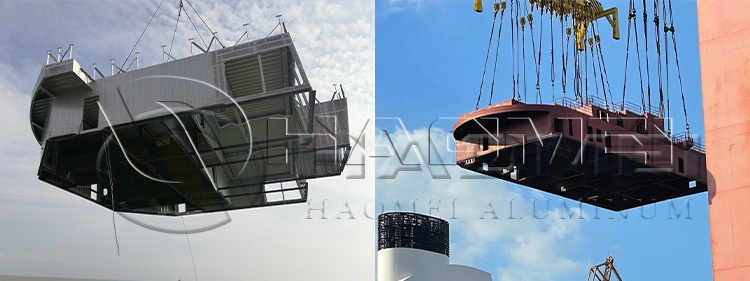
For ship decks, cabin panels, ramps, and lightweight floor structures, Aluminum FSW Plate can also reduce the amount of downstream fairing and straightening. The advantage is especially visible when long panels must stay flat before assembly with aluminum profiles, pipe supports, or stainless steel piping systems.
2. Which alloy is better for aluminum friction stir welding sheet: 5083, 5052, 6061, or 6082?
If the application is marine, 5083 and 5086 are usually preferred for hulls, decks, bulkheads, and offshore structures because they offer high strength and strong resistance to seawater corrosion. 5052 is easier to form and works well for lighter-duty covers, cabinets, and interior marine parts, but it is not normally selected when the highest structural strength is needed.
6061 and 6082 are popular in profiles, frames, rails, ladders, and extruded parts. They can be friction stir welded, but their heat-treatable nature means the weld zone may soften unless the process and temper are planned correctly. When a project combines FSW sheet with aluminum profiles, it is important to compare the mechanical properties of both the sheet and the profile after joining.
A practical selection rule is simple: choose 5xxx sheet for direct seawater exposure and large marine panels; choose 6xxx material where extrusion shape, machinability, or structural profiles matter more. If dissimilar alloys are joined, request a procedure qualification instead of assuming standard values.
3. Does aluminum friction stir welding sheet need heat treatment after welding?
For common marine 5xxx alloys such as 5083, post-weld heat treatment is generally not required and may even be undesirable if it affects corrosion performance. These alloys gain strength mainly from work hardening and magnesium content, not from precipitation hardening.
For 6xxx alloys such as 6061-T6 or 6082-T6, the answer is more complex. FSW creates a stir zone and a heat-affected zone where the original T6 strength can be reduced. Some applications accept that reduction because the joint still meets design requirements. Others may need artificial aging, modified joint design, or a thicker section to compensate.
If the sheet will be connected to pipe fittings, aluminum brackets, or stainless steel pipe supports, do not judge the FSW sheet alone. Check the full assembly: galvanic isolation, fastener choice, sealant compatibility, and coating plan all affect service life in saltwater.
4. What inspection documents should I request for FSW aluminum sheet?
A serious inquiry should include both material certification and weld verification. At minimum, ask for the aluminum sheet grade, temper, chemical composition, mechanical properties, thickness tolerance, flatness tolerance, and batch traceability. For welded panels, request weld procedure qualification records and sample test results.
Useful FSW inspection items include visual inspection, macrosection examination, tensile testing across the weld, bend testing, hardness mapping, and non-destructive testing when required by the project class or standard. For marine use, corrosion resistance and surface condition should also be reviewed, especially if the sheet will be painted, anodized, or exposed directly to seawater.
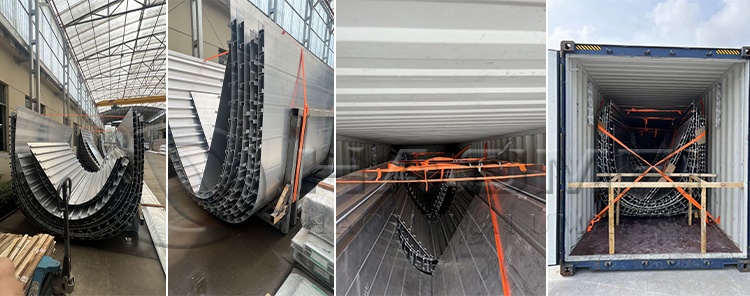
When the project uses large deck panels or stiffened modules, a second reference order of Aluminum FSW Plate specifications can help align expectations on rib geometry, panel width, straightness, and machining allowance before mass production starts.
5. Why is aluminum friction stir welding sheet more expensive, and when is it worth it?
FSW equipment, tooling, fixtures, and process control add cost at the production stage. The weld path must be clamped firmly, and the process is less flexible than manual MIG welding for small, irregular repairs. That is why the quoted unit price may look higher at first.
The value appears in later fabrication steps. FSW can reduce filler wire consumption, grinding, weld spatter cleaning, panel warping, and straightening time. For long marine sheets, this can make assembly faster and improve dimensional accuracy. A flatter panel also helps when installing aluminum profiles, pipe penetrations, stainless steel pipe runs, cable trays, and interior outfitting.
FSW is most worth considering when the project needs long straight seams, repeatable panels, attractive surface quality, lower distortion, and dependable fatigue performance. It is less suitable when the job is a one-off field repair, a highly complex three-dimensional joint, or a place where portable welding is the only realistic option.
Quick specification notes for new project inquiries
| Item to define | Recommended wording in an inquiry | Why it matters |
|---|---|---|
| Alloy and temper | 5083-H116, 5083-H321, 5052-H32, 6061-T6, or project-specified grade | Prevents confusion between marine sheet and general aluminum sheet. |
| Thickness and panel size | State thickness, width, length, and tolerance | FSW capacity and flatness depend on actual dimensions. |
| Service environment | Seawater, coastal air, freshwater, cabin interior, or deck area | Determines corrosion protection and alloy choice. |
| Inspection level | Visual, mechanical test, macrosection, NDT, or class-related testing | Aligns quality control with risk level. |
| Assembly interface | Profiles, welding wire, pipe fittings, or stainless steel pipe supports | Helps avoid galvanic corrosion and fit-up problems. |
A well-prepared inquiry for aluminum friction stir welding sheet should describe the real working environment, not only the grade and thickness. Marine projects often fail at interfaces: sheet to profile, aluminum to stainless steel, pipe fitting to bracket, or coated surface to fastener. FSW can improve the sheet joint, but the surrounding materials and installation details still need the same level of attention.