

5083 Aluminum Plate Supplier
Marine projects require more than a nominal alloy match. A qualified 5083 aluminum plate supplier must provide the specified temper, corrosion-performance evidence, lot traceability, dimensional control, and documentation required by the vessel, fabrication route, and class rules.
For hull structures, the principal concern is resistance to exfoliation corrosion after fabrication and service exposure. Alloy 5083 is an Al-Mg-Mn alloy widely used for welded hulls, decks, superstructures, tanks, and offshore structures because it retains useful strength without post-weld heat treatment. Material selection, however, must account for sensitization risk in high-magnesium 5xxx alloys.
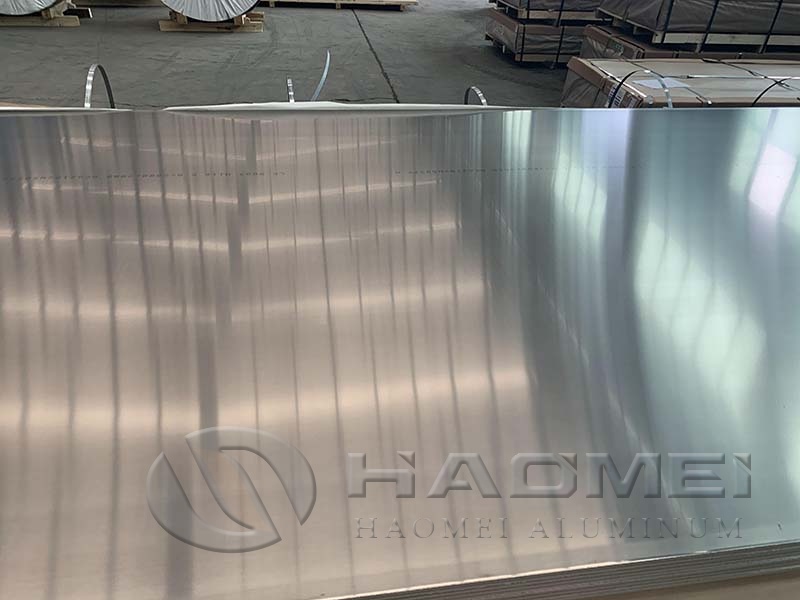
Specify First
Issue a purchase specification before comparing quotations. The document should state whether plate is intended for hull plating, internal structure, deck, tankage, or non-structural work. This determines the correct temper, testing scope, and certification package.
For marine hull and structural plate, H116 and H321 are commonly specified tempers. ASTM B928/B928M covers high-magnesium aluminum-alloy sheet and plate for marine service and similar environments where resistance to exfoliation corrosion is required. It is not interchangeable with every general-purpose plate specification.
| Item | What to State | Why It Matters |
|---|---|---|
| Alloy | AA 5083, applicable chemical standard | Confirms Mg and Mn composition controls |
| Temper | H116 or H321, when marine corrosion service applies | Supports corrosion-resistance requirements |
| Product standard | ASTM B928/B928M, EN 485, or contract requirement | Defines test and delivery conditions |
| Dimensions | Thickness, width, length, tolerances, flatness | Avoids rework and nesting losses |
| Surface | Mill finish, PVC film, allowable defects | Controls welding and appearance preparation |
| Certification | EN 10204 3.1, heat number, test results | Maintains traceability through fabrication |
| Class review | DNV, ABS, Lloyd's Register, BV, or project requirement | Aligns material documents with vessel approval |
A request simply stating 5083-H116 can still be incomplete. Define whether ultrasonic testing, cut-to-length tolerances, edge condition, protective film, or third-party witnessing is needed. These items can change lead time and processing cost materially.
Verify Corrosion
The high Mg content that gives 5083 its strength also requires sensible temperature management. Long exposure in an approximate 65-200°C range can promote sensitization in some 5xxx alloys, increasing susceptibility to intergranular and exfoliation corrosion. Welding itself creates localized thermal cycles, so material condition and welding procedure must be considered together.
ASTM G67, commonly called the nitric acid mass loss test, is used to assess susceptibility to intergranular corrosion in aluminum alloys. ASTM B928/B928M includes corrosion-test requirements for applicable products. Ask for the actual test status on the mill certificate or supporting report, rather than accepting a generic statement that material is "marine grade."
Useful verification steps include:
Match each plate's heat number to the mill test certificate.
Confirm chemistry against the applicable alloy specification, such as EN 573-3 where contracted.
Check tensile properties against the purchased temper and thickness range.
Review ASTM G67 results when ASTM B928/B928M or equivalent corrosion testing is specified.
Preserve plate identity through cutting, nesting, and welding operations.
The product specification for 5083 aluminum plate should also identify the governing dimensional standard. Mechanical values and tolerances vary with thickness and standard edition, so do not compare a certificate against values copied from an unrelated data sheet.
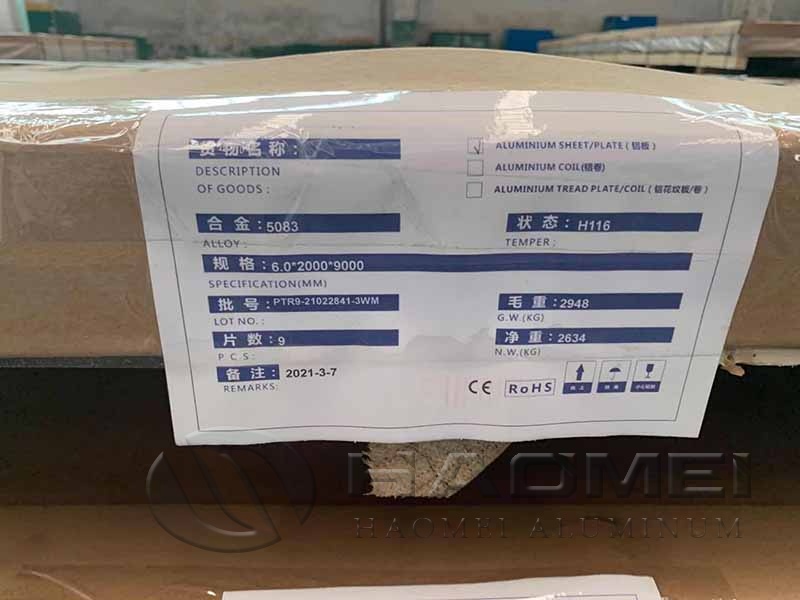
Compare Alloys
5083 is often selected when welded strength and marine exposure resistance are priorities. It is not automatically the most economical option for every component. Compare the actual design requirement rather than selecting on alloy name alone.
| Alloy | Typical Marine Use | Relative Strength | Sourcing Consideration |
|---|---|---|---|
| 5083 | Hull plating, decks, tanks, structural members | High among non-heat-treatable 5xxx alloys | Widely specified for marine plate |
| 5086 | Hull and welded marine structures | Similar, application-dependent | May suit established vessel specifications |
| 5052 | Interior parts, lighter-duty sheet work | Lower | Often selected where structural strength is not required |
| 5456 | Higher-strength marine structures | Higher in relevant tempers | Requires careful corrosion and fabrication review |
Where a drawing permits alternatives, assess weld procedure qualification, corrosion test requirements, class acceptance, and availability before changing alloy. For projects already qualified around 5086, 5086 aluminum plate may be technically appropriate, but substitution requires engineering approval and document control.
Control Fabrication
Plate quality can be lost after delivery. Store sheets and plates dry, off the floor, with separation that prevents trapped water. Avoid carbon-steel contamination from shared brushes, grinding discs, chains, or work tables. Remove oxide and contamination immediately before welding according to the approved procedure.
For structural aluminum welding, AWS D1.2/D1.2M is a commonly referenced code in many projects, while class societies may impose additional approval and inspection requirements. Filler selection, joint design, heat input, and post-weld cleaning all affect service performance. Material certificates alone do not validate a fabricated hull section.
For combined marine packages that also include seamless stainless steel pipe, keep documentation streams separate. Stainless pipe and tube commonly use different standards, such as ASTM A312/A312M for austenitic stainless steel pipe or ASTM A269/A269M for tubing. Do not apply aluminum plate acceptance tests to stainless products, even when both are supplied for the same vessel.
Price Structure
A reliable quotation separates metal value from conversion and logistics. The final plate price is usually influenced by the regional aluminum reference price, alloying and conversion premium, thickness and width, temper, testing, cutting, packaging, freight, duties, and payment terms.
| Cost Driver | Commercial Effect | Control Method |
|---|---|---|
| Thickness and width | Non-standard sizes can reduce mill availability | Standardize dimensions where design permits |
| Temper and testing | H116/H321 and corrosion evidence add controls | State required tests at inquiry stage |
| Cutting | Cut-to-length adds handling and yield loss | Provide nesting plan and tolerances |
| Packaging | Export seaworthy packaging adds cost | Define skid, wrap, and moisture barrier needs |
| Freight | Plate weight raises ocean and inland cost exposure | Compare delivered terms on the same Incoterm |
Avoid comparing a low ex-works number with a delivered quotation that includes certification, export packing, and third-party inspection. Request a line-item commercial breakdown and confirm the reference-date mechanism for aluminum price movements. This is especially important during market cycles where exchange prices, energy costs, freight capacity, and regional premiums change independently.
Qualify Supply
Supplier qualification should test repeatability, not only one sample certificate. Review manufacturing source, rolling capability, inspection equipment, export packaging controls, and responsiveness when a nonconformance occurs.
Use this release checklist:
Purchase order cites alloy, temper, standard, dimensions, and tolerances.
Mill certificate identifies manufacturer, heat, plate number, chemistry, and mechanical results.
Corrosion-test evidence is included when required by ASTM B928/B928M or the project specification.
Class documentation and inspection hold points are agreed before production.
Plate marking remains readable after packing and unloading.
Packing protects edges and surfaces from seawater, condensation, and transit abrasion.
Quantity, net weight, and dimensions are checked against packing list before release.
A disciplined specification and inspection process reduces disputes over temper, corrosion performance, and certificates. For marine structures, the appropriate 5083 plate is the plate that matches the approved design standard, arrives traceable, and remains controllable through welding and vessel service.