

Al 5052 H32 Mechanical Properties
Search discussions around al 5052 h32 mechanical properties often come from boat fabricators, dock equipment makers, tank manufacturers, and marine repair teams comparing strength, corrosion resistance, weldability, and bend performance. The questions below reflect common English Q&A-style concerns appearing on major search and community platforms, with practical answers written for material selection and purchasing communication.
Quick Reference: Typical 5052-H32 Mechanical Properties
The H32 temper means the alloy is strain-hardened and then stabilized to a quarter-hard condition. Values vary slightly by standard, thickness, mill practice, and certificate requirements, so final acceptance should be based on the supplied MTC.
| Property | Typical Range for 5052-H32 Sheet | Practical Meaning |
|---|---|---|
| Ultimate tensile strength | 210 to 260 MPa | Good general sheet strength for marine panels and covers |
| Yield strength | 160 to 215 MPa | Better dent resistance than annealed 5052-O |
| Elongation | 8% to 12% typical | Allows moderate forming without severe cracking |
| Brinell hardness | Around 60 HB | Suitable for formed sheet parts and light structural covers |
| Density | 2.68 g/cm3 | Lightweight compared with stainless steel |
| Modulus of elasticity | About 70 GPa | Similar stiffness range to many aluminum alloys |
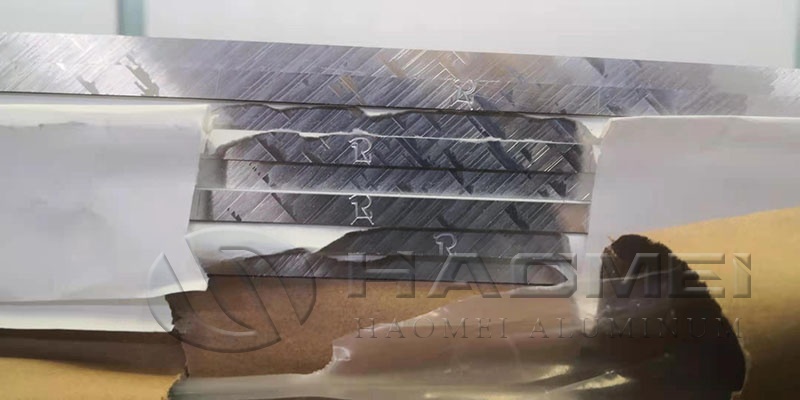
For projects needing commercial sheet supply, the 5052 aluminum plate is often selected for cabins, decks, covers, tank bodies, non-slip panels, and components exposed to humid or salty air.
1. Is 5052-H32 strong enough for marine sheet applications?
Yes, 5052-H32 is strong enough for many non-critical marine sheet applications, especially where corrosion resistance and formability are more important than maximum structural strength. Its magnesium content gives it better saltwater resistance than 3003 and many general-purpose aluminum grades.
However, it should not automatically replace stronger marine alloys in hull structures, high-load decks, or heavy-duty frames. For hull plating, patrol craft, workboats, and load-bearing welded structures, 5083, 5086, 5383, or 5059 may be preferred because they offer higher tensile and yield strength.
A useful way to think about 5052-H32 is this: it is a reliable marine sheet alloy for formed and exposed parts, but not the highest-strength hull alloy. It is widely used for instrument panels, lockers, hatches, small tanks, protective covers, roof panels, cabin panels, and interior marine fabrications.
2. What does H32 mean in 5052-H32, and how is it different from H34 or O temper?
The alloy number 5052 identifies the chemical family, while H32 describes the temper. The letter H means the material has been strain-hardened. The number 3 means it has been strain-hardened and stabilized. The final number 2 indicates a quarter-hard condition.
Compared with 5052-O, 5052-H32 has higher yield strength and better resistance to minor deformation, but lower stretchability. Compared with 5052-H34, H32 is easier to bend and form, while H34 is harder and slightly stronger.
| Temper | Strength | Formability | Typical Use |
|---|---|---|---|
| 5052-O | Lowest | Excellent | Deep forming, complex curved parts |
| 5052-H32 | Medium | Good | Marine sheet panels, covers, tanks, formed parts |
| 5052-H34 | Higher | Moderate | Flatter panels needing more dent resistance |
If a part requires tight bending, rolled edges, or repeated forming operations, H32 is usually more forgiving than H34. If flatness and higher surface rigidity matter more, H34 may be considered.
3. Can 5052-H32 be bent without cracking?
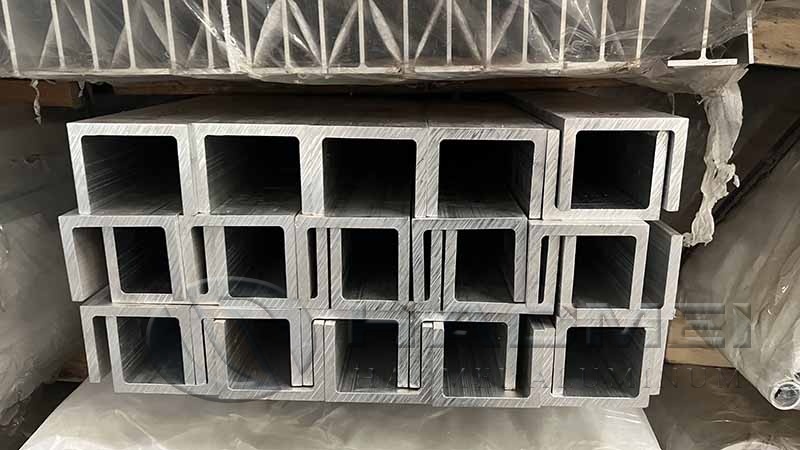
5052-H32 can generally be bent well, but the bend radius, sheet thickness, grain direction, and tooling condition matter. A common mistake is judging bendability only by the alloy name. The temper controls much of the behavior.
For thin 5052-H32 sheet, moderate bends are usually successful with clean tooling and a suitable inside radius. For thicker plate, forcing a sharp inside bend may create edge cracking, especially across rough sheared edges. Deburring and using a larger radius reduce the risk.
| Fabrication Factor | Recommendation |
|---|---|
| Bend direction | Bending across the grain is often preferred for crack resistance |
| Edge preparation | Remove burrs and sharp notches before forming |
| Inside radius | Increase radius as thickness increases |
| Tooling | Avoid worn dies that mark or pinch the surface |
| Temperature | Room-temperature forming is common; avoid uncontrolled heating |
For marine sheet parts, drawings should specify both alloy-temper and bend radius. This avoids receiving a sheet that meets strength requirements but fails during forming.
4. How does 5052-H32 compare with 5083 aluminum for marine use?
5052-H32 and 5083 are both magnesium-containing aluminum alloys with good resistance to marine atmospheres, but they do not serve the same role. 5052-H32 is easier to form and widely used for sheet parts. 5083 is stronger and is often preferred for hulls, heavy welded structures, and classification-related marine plate.
| Item | 5052-H32 | 5083 Marine Plate |
|---|---|---|
| Strength | Medium | Higher |
| Formability | Better | Moderate |
| Welded structural use | Light to medium duty | Heavy-duty marine structures |
| Corrosion resistance | Very good | Excellent in seawater service |
| Cost tendency | Often lower | Often higher |
| Common parts | Covers, tanks, panels | Hulls, decks, bulkheads |
For small vessels, docks, gangways, and deck accessories, both alloys may appear in the same project. A fabricator may use 5083 for structural panels and 5052-H32 for formed covers or interior components. This mixed-alloy approach can reduce weight and cost while keeping performance aligned with the loading conditions.
5. Is 5052-H32 easy to weld, and which filler wire is suitable?
5052-H32 is considered weldable by common MIG and TIG processes. The usual filler choices include 5356 and, in some cases, 5183, depending on strength, corrosion exposure, anodizing color match, and project standards. For marine assemblies, filler selection should match the service environment rather than only the base metal name.
Welding changes the temper in the heat-affected zone. This means the welded area will not retain the full H32 strain-hardened strength. When designing tanks, brackets, or covers, engineers should consider the as-welded strength near the joint. This is especially important where the part is under vibration, wave impact, or cyclic loading.
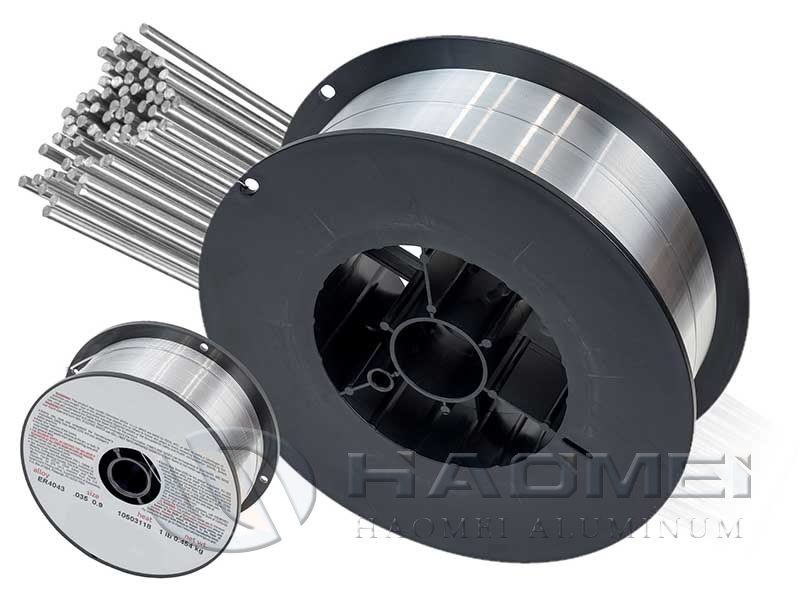
For production welding, consistent wire chemistry, clean storage, and oxide removal are essential. Moisture and contamination can cause porosity. Marine fabricators often pair aluminum sheet procurement with approved filler such as Alu Welding Wire to maintain stable welding quality across batches.
Typical Chemical Composition Context
The performance of 5052-H32 comes mainly from magnesium, with chromium helping improve stability. Exact limits depend on the applicable standard.
| Element | Typical Role in 5052 Alloy |
|---|---|
| Magnesium | Improves strength and corrosion resistance |
| Chromium | Helps grain structure and corrosion behavior |
| Iron and silicon | Controlled impurities affecting surface and workability |
| Aluminum | Balance element providing low density and formability |
When ordering marine sheet, it is practical to ask for alloy, temper, thickness tolerance, surface finish, applicable standard, inspection certificate, and packaging method. For sea transport or humid storage, moisture-proof packaging and surface protection reduce staining before fabrication.
Practical Selection Notes for Marine Projects
Choose 5052-H32 when the part needs a balance of corrosion resistance, moderate strength, and good forming. It is a sensible option for cabinets, tanks, enclosures, deck accessories, marine trim, instrument panels, and formed guards.
Choose a stronger 5xxx marine alloy when the part is load-bearing, classification-controlled, or exposed to repeated wave impact. Choose softer 5052-O when the part needs deep drawing or complex forming. Choose H34 when the part is flatter, less formed, and needs slightly greater dent resistance.
For communication with a supplier, avoid asking only for "5052 aluminum." A clearer request is: "5052-H32 marine aluminum sheet, thickness, width, length, standard, certificate requirement, surface condition, and packing requirement." That wording reduces misunderstandings and helps the mill or stockist quote material closer to the real application.