

Al 5052 H32 Properties
For marine fabricators and large industrial sourcing teams, the main concern with 5052-H32 is not only strength. It is whether the material can resist saltwater exposure, form without cracking, weld cleanly, and arrive with verifiable certification. This article focuses on one high-impact feature: corrosion resistance in marine and coastal service.
Standards First
5052 is an aluminum-magnesium alloy in the 5xxx series. H32 means the metal has been strain hardened and stabilized to a quarter-hard temper. It is stronger than annealed 5052-O, easier to form than harder H34 or H36 tempers, and widely used where seawater, spray, and humid air are present.
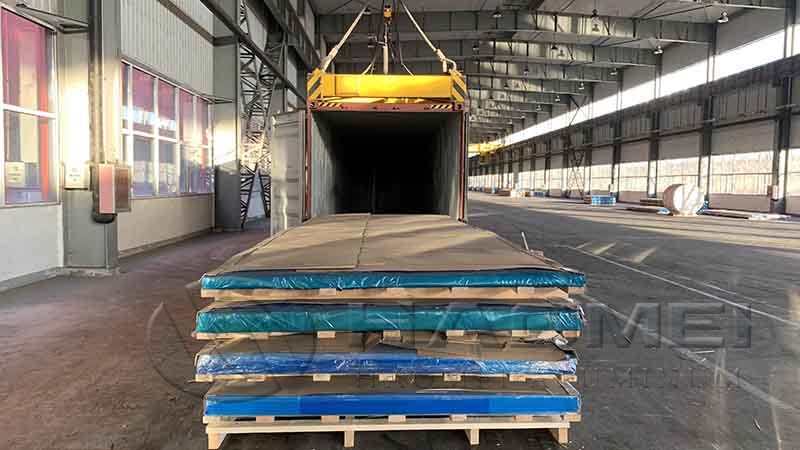
When specifying 5052 aluminum plate, request compliance to ASTM B209 or EN 485-2, plus a mill test certificate showing chemistry, temper, dimensions, and mechanical results. Do not accept only a packing list for marine work.
Property Table
Typical values below are for reference. Acceptance must follow the ordered standard, thickness range, and mill certificate.
| Item | 5052-H32 reference value | Why it matters |
|---|---|---|
| Aluminum Association designation | 5052 | Confirms 5xxx Al-Mg alloy family |
| Temper | H32 | Quarter-hard, stabilized condition |
| Density | About 2.68 g/cm3 | Lower structural weight than steel |
| Elastic modulus | About 70 GPa | Used for deflection checks |
| Ultimate tensile strength | About 210-260 MPa, thickness dependent | Supports panel and bracket sizing |
| Yield strength | About 160-195 MPa, thickness dependent | Helps prevent permanent deformation |
| Elongation | Commonly 8-12% or higher by thickness | Indicates forming margin |
| Brinell hardness | About 60 HB | Useful for handling and wear comparison |
| Thermal conductivity | About 138 W/m·K | Supports heat transfer estimates |
| Melting range | About 607-649 °C | Relevant for welding and heat exposure |
Chemistry Check
The corrosion behavior of 5052 comes mainly from magnesium and chromium additions. Compare the certificate with recognized composition limits from Aluminum Association data and ASTM/EN material standards.
| Element | Typical specified range or max, wt.% | Function |
|---|---|---|
| Magnesium | 2.2-2.8 | Raises strength and seawater resistance |
| Chromium | 0.15-0.35 | Improves stability and corrosion behavior |
| Iron | 0.40 max | Excess can reduce surface quality |
| Silicon | 0.25 max | Controlled impurity |
| Copper | 0.10 max | Low level supports corrosion resistance |
| Manganese | 0.10 max | Controlled addition |
| Zinc | 0.10 max | Controlled impurity |
| Aluminum | Balance | Base metal |
Marine Fit
5052-H32 performs well in boat components, deck panels, gangways, cabinets, fuel tank bodies, instrument enclosures, and coastal equipment covers. It is especially practical where repeated forming, bending, and moderate structural loading are required.
Its limitation is strength. For heavily loaded hull structures or classification-critical offshore components, higher-strength 5xxx alloys may be better. This is why 5052-H32 should be selected by load case, corrosion exposure, and forming method, not by alloy popularity.
Compare Alloys
| Alloy temper | Relative strength | Corrosion resistance | Formability | Typical marine use |
|---|---|---|---|---|
| 5052-H32 | Medium | Excellent in marine atmosphere | Very good | Tanks, covers, panels, formed parts |
| 5083-H116/H321 | High | Excellent seawater resistance | Moderate | Hull structures, decks, welded frames |
| 5086-H116 | Medium-high | Excellent seawater resistance | Good | Workboats, marine structures |
| 6061-T6 | Medium-high | Good, but less preferred for direct seawater | Moderate | Machined parts, extrusions, fittings |
Select 5052-H32 when corrosion resistance and forming are more important than maximum strength. Select 5083 or 5086 when the design requires higher welded structural performance.
Welding Plan
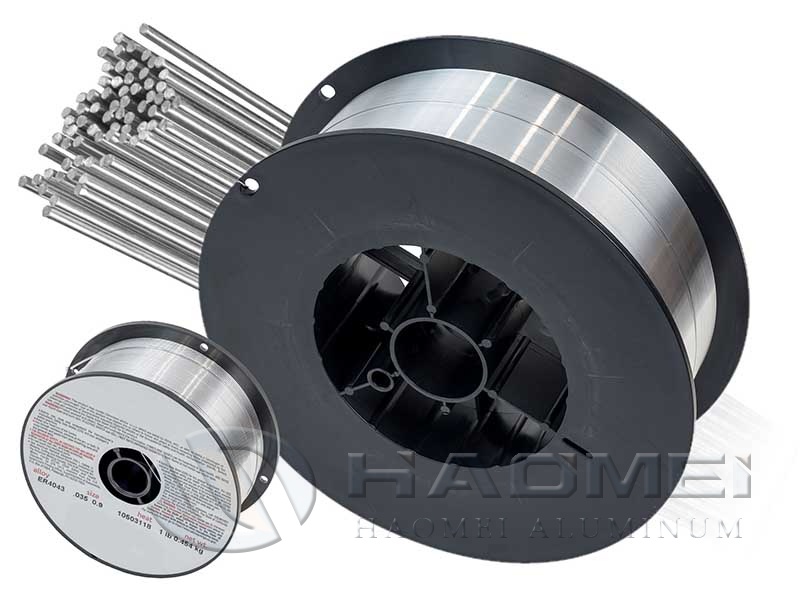
5052-H32 is weldable by MIG and TIG processes. Common filler choices include 5356, 5554, or 5183, depending on design strength, service temperature, anodizing appearance, and governing code. AWS A5.10 is the recognized specification family for aluminum welding wires and electrodes.
For marine assemblies, pair the base metal order with qualified filler selection from Alu Welding Wire and require weld procedure qualification when the component is safety related.
Use this welding checklist before release:
Confirm filler alloy against the drawing, code, and service temperature.
Remove oxide, oil, and chloride contamination before welding.
Use stainless steel brushes dedicated only to aluminum.
Control heat input to limit distortion and strength loss near welds.
Inspect welds visually and by NDT where the design requires it.
Record welder ID, filler batch, base metal heat number, and inspection results.
Spec Checklist
A complete purchase specification reduces disputes and prevents unsuitable substitutes.
| Requirement | What to write on the order |
|---|---|
| Alloy and temper | 5052-H32 |
| Standard | ASTM B209, EN 485-2, or project-approved equivalent |
| Thickness tolerance | State required table and tolerance class |
| Surface | Mill finish, PVC film, anodizing-ready, or painted-ready |
| Flatness | State tolerance requirement for CNC cutting or assembly |
| Certificate | MTC/CMTR with chemistry and mechanical values |
| Traceability | Heat number and batch number marked on material and documents |
| Packaging | Seaworthy packing, moisture barrier, edge protection |
| Inspection | Third-party inspection if class or contract requires it |
Cost Controls
Do not evaluate 5052-H32 only by unit weight price. Total landed cost depends on aluminum market reference, conversion charge, thickness, width, surface protection, cutting service, packing, container utilization, freight, and payment terms.
For transparent pricing, request a formula that separates:
LME or regional aluminum reference date.
Alloy and temper conversion cost.
Surface film, cutting, and packaging fees.
Freight term under Incoterms 2020.
Quotation validity period.
This approach allows fair comparison when aluminum prices move quickly. It also prevents hidden charges for protective film, non-standard widths, or export packing.
Inspection Request
Before shipment, ask the supplier to provide photos, dimensional records, certificate copies, and packing confirmation. For corrosion-critical marine projects, add these checks:
Verify alloy 5052 and temper H32 on certificate and markings.
Check Mg and Cr content against the ordered standard.
Confirm tensile and yield values meet the thickness-specific requirement.
Inspect surface for water stains, scratches, and embedded steel particles.
Confirm protective paper, film, or interleaving is dry and intact.
Require clear heat number traceability from certificate to material marking.
These steps make al 5052 h32 properties measurable in real procurement and fabrication work, not just in a datasheet.