

Marine Aluminium Extrusions
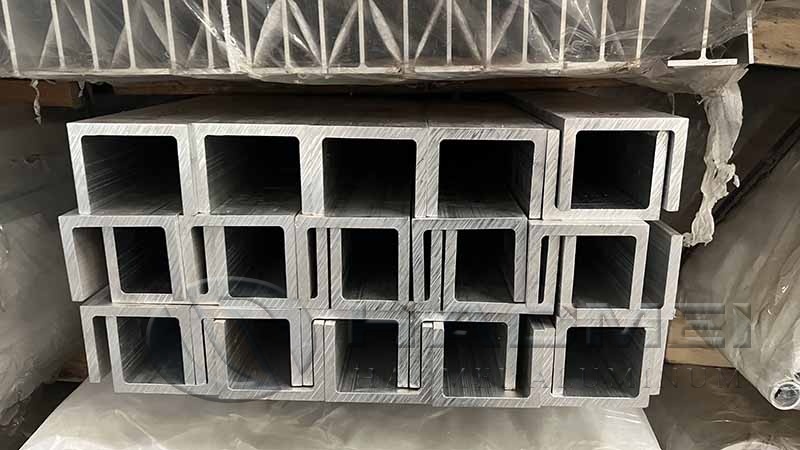
Marine aluminium extrusions are used to build lightweight, corrosion-resistant structures for boats, offshore equipment, docks, and coastal infrastructure. For bulk buyers who normally source sheet, coil, strip, and foil, extrusions can look confusing because they are specified differently: the shape + alloy + temper + standard + tolerance + surface condition matters as much as thickness and width do.
What counts as marine aluminium extrusions (and what it doesnt)
Marine is not a single alloyits a service environment. Salt spray, intermittent immersion, dissimilar-metal contact, and crevices can accelerate corrosion. Marine extrusions generally fall into two functional groups:
Structural and framing profiles: square/rectangular tube, angles, channels, T-bars, custom stiffeners.
Outfitting and access profiles: rails, ladders, gangways, hatches, rub rails, and attachment profiles.
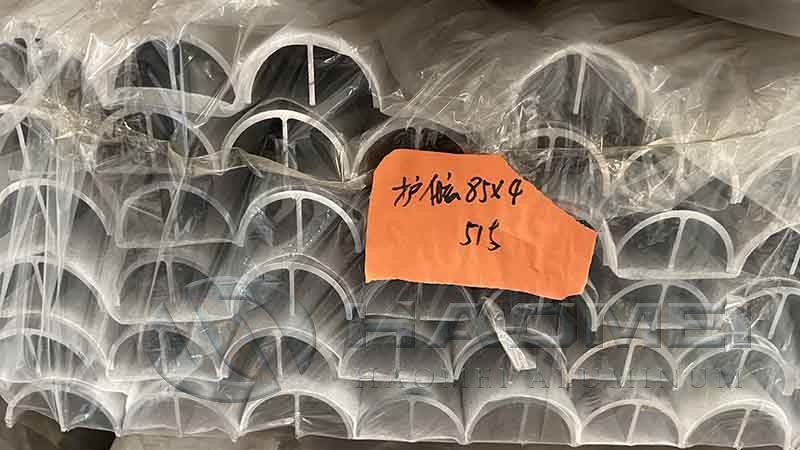
A common misunderstanding is to assume the same alloy that excels in plate automatically works for complex extrusions. In practice, high-magnesium 5xxx alloys (excellent corrosion resistance) are widely used in plate, while 6xxx alloys (excellent extrudability and strength after heat treatment) dominate many extrusion profiles.
If your project is boat-focused, specifying purpose-built Aluminum Boat Extrusions can reduce redesign risk because typical marine sections and tolerances are already proven in service.
Alloy selection: choosing between 5xxx and 6xxx for marine use
Bulk buyers often start with corrosion resistance, then work backward to manufacturability and mechanical needs. Use the table below as a practical shortlist.
| Alloy family | Typical alloys | Why buyers use it in marine | Watch-outs | Common extrusion use |
|---|---|---|---|---|
| 5xxx (Al-Mg) | 5083, 5086, 5052 | Excellent seawater corrosion resistance; good weldability | Not heat-treatable; extrusion availability is more limited than 6xxx | Some specialized profiles, bars, selected components; often paired with plate |
| 6xxx (Al-Mg-Si) | 6061, 6082, 6063 | Very good extrudability; heat-treatable (T5/T6); strong-to-weight | Corrosion resistance is good but requires smart design (avoid crevices) and correct finishing | Most structural profiles, rails, frames, ladders, gangways |
Quick purchasing guidance
If your design is plate-heavy (hulls, large panels), you may already buy 5083/5086 sheet and plate; extrusions in 6xxx can still be compatible if welding procedures and isolation from dissimilar metals are planned.
If your design is profile-heavy (frames, stiffeners, modular structures), 6061/6082 are often the most available choices with consistent mechanical properties.
Specifications bulk buyers should lock in (to avoid supplier mismatch)
Most quality issues in marine extrusions are not wrong alloytheyre unclear requirements. When you request a quote or place an order, include the items below.
| What to specify | Why it matters in marine extrusions | Example of how to write it |
|---|---|---|
| Alloy + temper | Mechanical properties, weld response, corrosion behavior | 6082-T6 or 6061-T6 |
| Standard | Aligns chemistry, mechanical tests, tolerances | EN 755 / ASTM B221 (as applicable) |
| Profile drawing + critical dimensions | Extrusion tolerances vary across walls, corners, and hollows | As per drawing Rev.C; mark critical dims |
| Straightness/twist limits | Long profiles can warp, affecting assembly and sealing | Max twist X/m; straightness Y mm/m |
| Surface condition | Marine finishing depends on surface quality | Mill finish, suitable for anodizing |
| Cut length + end condition | Prevents handling damage and speeds fabrication | 6000 mm 2 mm, deburred |
| Packaging | Salt air and abrasion during transit can mark surfaces | Interleaved + seaworthy packing |
Corrosion control questions buyers should ask
A buyer used to coil and sheet may not realize how geometry changes corrosion risk. Ask your supplier/fabricator:
Will the profile create crevices that trap saltwater (inside hollows, lap joints, tight interfaces)?
Are there dissimilar-metal contacts (stainless fasteners, copper busbars) requiring isolation?
What finish is plannedanodizing, marine coating, or bareand what surface quality is needed?
How extrusions integrate with sheet/coil procurement (a practical B2B view)
Many marine projects are a hybrid of extrusions and flat-rolled products:
Extrusions provide stiffness and assembly speed: frames, longitudinals, edge trims, and mounting sections reduce welding time versus built-up plate shapes.
Sheet/plate provides watertight skins: decks, bulkheads, hull plating, lockers.
When buyers source both, focus on compatibility in these areas:
Welding procedures: Confirm filler selection and heat input expectations. 6xxx extrusions can lose strength in heat-affected zones; designers often compensate with section geometry.
Dimensional stack-up: Extrusion tolerances plus sheet flatness can create fit-up issues; define which dimensions are critical to function.
Finishing sequence: Decide whether parts are finished before or after fabrication. Anodized parts may require masking at weld zones; painted assemblies need surface prep suitable for marine exposure.
For projects that also rely heavily on flat product in corrosive zones, pairing extrusion framing with marine-grade sheet/plate is common. For example, marine aluminum plate is often selected for hulls and decks where maximum seawater resistance is required.
Buyer checklist: reduce risk before ordering in bulk
Use this short checklist to align engineering, procurement, and your extrusion supplier:
Confirm service environment (coastal splash, full immersion, offshore) and target life.
Choose alloy based on availability + fabrication route (extrude, weld, machine, finish).
Lock in standard, temper, and tolerancesespecially straightness and twist.
Define surface expectations (mill finish vs anodize-ready vs painted) and packaging.
Plan corrosion mitigation (drain paths, isolation, sealants, coatings).
Marine aluminium extrusions perform extremely well when the alloy, profile design, and specification details match the real exposure conditions. For bulk buyers, the fastest path to consistent quality is a purchase specification that is as clear about tolerances, finish, and use-case as it is about alloy and temper.