

5083 Aluminum Sheet Price
For marine vessel builders, fabricators, and industrial stockholders, the central concern is not simply the quoted 5083 aluminum sheet price. The practical issue is whether the delivered material meets marine corrosion, flatness, temper, documentation, and delivery requirements without creating downstream welding or classification risk.
5083 is a non-heat-treatable Al-Mg alloy used widely in hull plating, decks, superstructures, tanks, landing craft, offshore equipment, and cryogenic applications. Its price must be assessed as a delivered, specification-controlled cost rather than a single metal-rate figure.
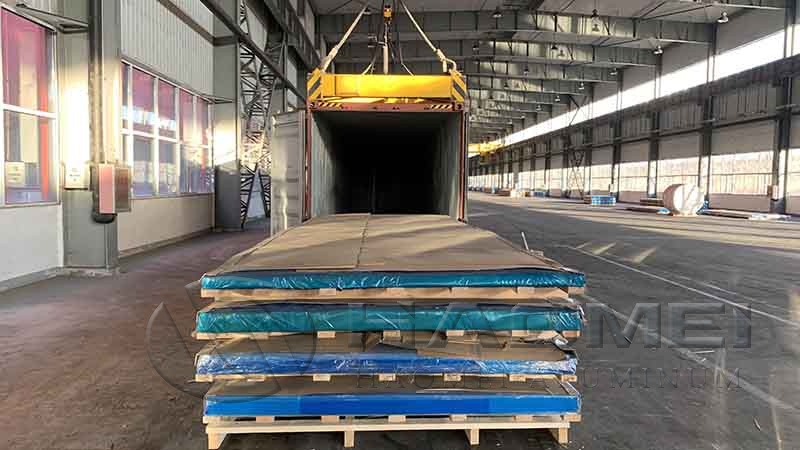
Price Structure
A supplier quotation for 5083 normally combines several cost elements. Comparing only a price per tonne can hide significant differences in certification, surface quality, dimensional tolerance, and freight responsibility.
| Cost component | What it covers | Questions to ask |
|---|---|---|
| Primary aluminum value | Exchange-linked aluminum basis, commonly referenced to LME aluminum | What LME settlement date and currency conversion method apply? |
| Alloying and conversion | Magnesium content, casting, hot rolling, cold rolling, leveling, cutting, packing | Is the temper H116, H321, H111, or H32? |
| Regional premium | Physical metal delivery premium, location, financing, availability | Is the regional premium fixed or variable until shipment? |
| Product premium | Width, thickness, plate or sheet form, tight tolerances, surface condition | Does the quote include mill-edge or trim-edge material? |
| Testing and documents | Chemical analysis, mechanical tests, corrosion testing, class documentation | Are EN 10204 Type 3.1 certificates included? |
| Logistics | Export packing, inland haulage, port charges, ocean freight, insurance | Is the commercial term EXW, FOB, CFR, CIF, DAP, or DDP? |
A reliable cost comparison uses the same Incoterm, delivery location, thickness, width, temper, standard, certificate level, and order quantity. A lower ex-works rate may become more expensive after freight, export packing, inspection, and destination handling are added.
Material Scope
The term sheet can be misused in commercial discussions. In many aluminum standards, the boundary between sheet and plate is thickness-based, but exact definitions vary by standard and product specification. Confirm the governing standard rather than relying on a generic product name.
For marine work, 5083 is frequently specified in H116 or H321 temper because these tempers are associated with improved resistance to exfoliation corrosion in high-magnesium 5xxx-series products. ASTM B928/B928M covers high-magnesium aluminum-alloy sheet and plate intended for marine service and similar environments. ASTM B209/B209M is also commonly referenced for general aluminum and aluminum-alloy sheet and plate requirements.
When a hull or offshore structure is subject to classification approval, the material specification must also align with the applicable class society rules and project drawings. DNV, ABS, Lloyd's Register, Bureau Veritas, and CCS each publish marine material requirements and approval frameworks. The final requirement comes from the contract, vessel class notation, and approved construction plan.
A quotation for 5083 aluminum plate should state whether class approval, mill approval, or third-party inspection is required. These are separate commercial and technical items.
Cost Drivers
The largest price movements generally originate upstream, while project-specific premiums arise downstream.
| Driver | Effect on delivered cost | Risk-control action |
|---|---|---|
| LME aluminum movement | Changes the metal component of the invoice | Define a pricing date or hedging mechanism in the purchase contract |
| Magnesium availability | Can affect 5xxx alloy conversion cost and mill scheduling | Request a quote validity period and production window |
| Thickness and width | Wide, thin, or non-standard dimensions can reduce rolling yield | Standardize dimensions across hull, deck, and tank packages |
| Temper | H116 and H321 may require additional process control and testing | Specify temper in the inquiry, not after quotation |
| Corrosion testing | ASTM B928-related requirements can add testing and lead time | State corrosion-test and certificate requirements early |
| Freight cycles | Container, breakbulk, and ro-ro rates can change rapidly | Separate metal value from freight in the quotation |
| Order mix | Mixed sizes raise cutting, handling, and packing costs | Consolidate dimensions where design permits |
Marine aluminum pricing is also affected by mill capacity cycles. When shipbuilding, defense, transport, or LNG-related fabrication demand rises, mills may prioritize scheduled contracts and longer rolling campaigns. Short-notice requirements for wide marine plate, especially in H116 or H321, can carry a materially higher conversion premium than standard mill-run material.
Specification Check
Use this checklist before requesting comparable offers:
- State alloy as AA 5083 and identify the required temper: H111, H116, H321, or another approved condition.
- List thickness, width, length, dimensional tolerances, flatness requirements, and edge condition.
- Identify the governing standard, such as ASTM B928/B928M, ASTM B209/B209M, EN 485-2, or the project specification.
- Confirm whether a class society certificate, mill test certificate, or EN 10204 Type 3.1 inspection certificate is required.
- Specify required testing, including chemical composition, tensile properties, bend testing, ultrasonic examination where applicable, and corrosion testing.
- Define surface requirements: mill finish, protective film, acceptable scratches, dents, oxide marks, and handling marks.
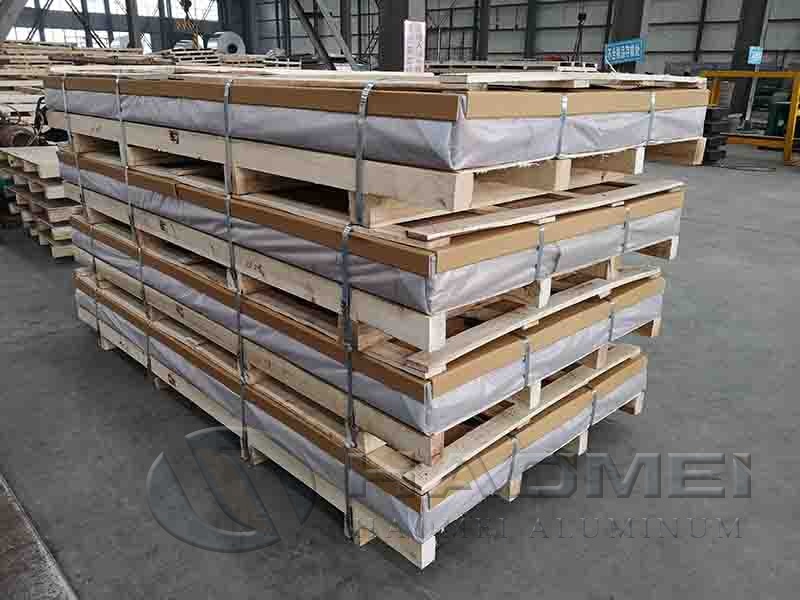
- Set packing requirements for marine transit, including interleaving, moisture barriers, desiccant, skids, and corner protection.
- Fix commercial terms, shipment tolerance, partial-shipment policy, delivery point, and payment currency.
Temper Choice
Temper selection directly affects fabrication performance and corrosion assurance. It should not be selected solely to reduce the quoted material rate.
| Temper | Typical commercial use | Procurement consideration |
|---|---|---|
| H111 | Lightly strain-hardened material with good forming capability | Suitable where project engineering permits it; verify mechanical-property requirements |
| H116 | Marine-oriented strain-hardened temper with exfoliation-corrosion resistance expectations | Often specified for hull and structural exposure; confirm ASTM B928/B928M compliance if required |
| H321 | Stabilized strain-hardened temper used in marine applications | May be selected for certain welded marine structures; confirm approved welding procedure compatibility |
Welding should be considered at the quotation stage. 5083 loses some strength in the heat-affected zone because it is not precipitation-hardened. Design allowables, filler metal selection, weld sequence, and post-weld distortion control therefore influence the real project cost more than a small initial price difference.
For applications requiring a related alloy with slightly different fabrication or corrosion priorities, 5086 aluminum plate may be evaluated against the engineering specification. Alloy substitution requires approval from the designer, class authority where applicable, and contract technical representative.
Supply Controls
Marine-grade material should be traceable from finished sheet back to the mill heat or cast lot. This is especially important when aluminum is supplied alongside seamless stainless steel pipe, where mixed-material storage can create identification and surface-contamination issues.
Apply these controls at receipt:
- Match bundle tags, heat numbers, dimensions, and temper against the packing list and certificate.
- Check the certificate chemical analysis against the specified 5083 composition limits in the governing standard.
- Verify tensile values and test direction where required by the drawing or standard.
- Inspect for water staining, edge damage, deep scratches, transit dents, and inadequate protective packing.
- Store aluminum separately from carbon steel processing areas to reduce embedded ferrous contamination.
- Keep stainless steel pipe, aluminum sheet, and carbon steel tooling segregated during fabrication.
Quote Comparison
Use a normalized comparison sheet before awarding supply.
| Comparison item | Offer A | Offer B | Acceptable condition |
|---|---|---|---|
| Metal basis | Same LME date or stated formula | ||
| Alloy and temper | AA 5083, approved temper | ||
| Standard | Project-required ASTM, EN, or class rule | ||
| Certificate | Mill certificate and required inspection level | ||
| Dimensions | Same thickness, width, length, and tolerance | ||
| Quantity tolerance | Defined positive and negative tolerance | ||
| Packing | Export-grade moisture and damage protection | ||
| Freight term | Same Incoterm and named location | ||
| Delivery window | Aligned with fabrication schedule | ||
| Total landed cost | Calculated in one currency and delivery point |
A technically complete inquiry reduces pricing variation, protects marine compliance, and makes the final delivered cost of 5083 aluminum sheet measurable rather than speculative.